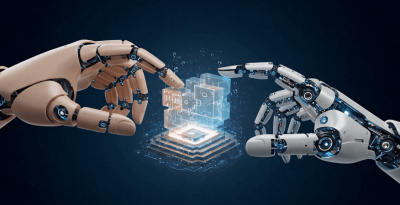
The future internet will be centered on AI intelligent agents, building a new digital ecosystem of human-machine symbiosis and virtual-real integration. From autonomous execution to cross-platform collaboration, intelligent agents will reconstruct the internet's operational logic; integrated computing and network technologies and space-air connectivity will solidify the digital foundation; data-real integration will drive industrial transformation, and the release of data value and compliance governance will advance simultaneously, ultimately leading to a more efficient and equitable digital civilization. From PC interconnection to mobile interconnection, and now to intelligent interconnection, the internet is undergoing its third paradigm shift. 2026, as a key juncture for technology implementation and industrial transformation, will see the deep integration of technologies such as artificial intelligence, computing networks, digital twins, Web3.0, and satellite interconnection, propelling the internet from information connectivity to intelligent collaboration, from traffic competition to value creation, and from platform monopoly to open co-governance. In the next five to ten years, the internet will be centered on AI intelligent agents, based on integrated computing and network technologies, driven by data-real integration, linked by data value, and grounded in compliance governance, building a new digital ecosystem of human-machine symbiosis, virtual-real integration, and security and controllability.
Technological Advancement and Algorithmic Innovation
The Core Role of Technological Advancement
Technological advancement is one of the core driving forces behind the development of artificial intelligence. In recent years, breakthroughs in algorithms such as deep learning and reinforcement learning have enabled AI to make significant progress in areas such as image recognition and natural language processing. For example, OpenAI's GPT series models, through large-scale pre-training and fine-tuning, have significantly improved language generation and comprehension capabilities.
Challenges and Solutions of Algorithmic Innovation
While algorithmic innovation brings enormous potential, its complexity also presents challenges. For example, the interpretability and generalization ability of models remain insufficient. In practice, combining techniques such as transfer learning and federated learning can alleviate these problems to some extent. Furthermore, contributions from the open-source community have accelerated algorithm iteration and optimization.
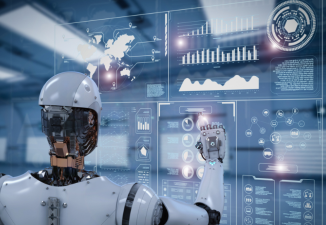
Multi-Domain Applications Empowered by Intelligent Computing Centers
Healthcare: Intelligent Diagnosis and Precision Treatment
A medical image diagnosis system supported by an intelligent computing center can rapidly process massive amounts of image data through deep learning algorithms, providing efficient support for the early diagnosis of diseases such as cancer. This not only improves diagnostic accuracy but also provides remote diagnostic services to areas with insufficient medical resources.
Transportation: Intelligent Mobility and Efficient Management
The intelligent computing center's massive computing power supports the real-time operation of intelligent traffic management systems. By integrating data from cameras, sensors, and other sources, the center enables functions such as traffic flow prediction and traffic light optimization, significantly alleviating urban congestion. Furthermore, its computing power provides remote support for autonomous driving technology.
Finance: Smart Risk Control and Precise Assessment
Banks use the intelligent computing center to run risk assessment models, rapidly processing multi-source information such as credit records and transaction data. The center's powerful computing capabilities enable financial institutions to provide real-time market risk warnings and optimize investment decisions.
Manufacturing: The Core Driver of Smart Factories
By connecting production equipment and sensors in real time, the intelligent computing center accurately locates and quickly repairs production anomalies, significantly reducing equipment downtime. Simultaneously, its intelligent scheduling capabilities optimize production plans, reduce inventory waste, and improve supply chain efficiency.
Education: Personalized Learning Services
The intelligent computing center provides powerful computing support for online education platforms. By analyzing massive amounts of learning behavior data, it customizes personalized learning paths for students, improving learning efficiency and interest.
Conclusion
As a core pillar of intelligent computing power development, intelligent computing centers are transforming from technology supporters into enablers across multiple fields. Against the backdrop of explosive growth in computing power demand and the growing acceptance of green development concepts, intelligent computing centers will continuously drive the global digital economy towards high-quality development. In the future, they will not only be intelligent engines for various industries but also crucial cornerstones for building a smart society, providing endless impetus for humanity's journey towards an intelligent era.